About our building automation services

Industrial automation, building automation

We serve both residential and commercial clients. Whether it is heating a family home or air-conditioning an office building, we deliver solutions that ensure comfort while maximizing energy efficiency. Because every building is unique, we provide tailored solutions and customized proposals for each project.

Our Services for Companies

One of the most important competitive advantages of modern industry is efficiency. With rising energy and labor costs, automation is no longer an option, but a strategic necessity.

The goal of industrial automation is to ensure that manufacturing and processing processes operate reliably and consistently with minimal human intervention. Modern automated systems can reduce scrap rates, increase production efficiency, reduce operating costs, and improve process transparency and safety.

Limitations of old systems

Outdated automation systems are often inaccurate, difficult to manage, and have limited scalability. Problems with old technologies include:

  • unreliable operation,

  • complicated servicing,

  • fixed, difficult-to-change settings,

  • lack of spare parts,

  • incompatibility with modern devices,

  • weak protection against unauthorized interventions.

Inaccurate operation can cause significant scrap and direct production loss.

Modern automation systems

The systems we develop are built on modern technological foundations. During automation, we develop new sensors, modern control and precise process monitoring, and provide a transparent user interface.

Using the graphic display:

  • the entire process can be monitored in real time,

  • each sub-process can be displayed separately,

  • the status of sensors and switches can be easily checked,

  • errors can be identified more quickly.

This significantly simplifies daily operation and maintenance.

Security and expandability

Our systems operate with authorization levels, so management, operators and service technicians can be given different access levels. The system is able to quickly recognize emergencies and errors, and alarms are clearly displayed on the user interface.

Main advantages:

  • simple and quick handling,

  • precise and reliable operation,

  • compatibility with modern technologies,

  • password protection and authorization management,

  • detailed error logging,

  • easy expandability,

  • flexible parameterization options.

Applied technologies

We primarily work with Honeywell and Siemens systems in our projects. Our specialists have extensive experience in PLC programming, developing industrial controls and process monitoring systems, and modernizing existing systems.

If required, we can adapt our systems to other manufacturers' technologies and existing systems.

Full service

Our company provides support throughout the entire process of industrial automation:

  • planning,

  • system development,

  • programming,

  • execution,

  • commissioning,

  • modernization,

  • maintenance,

  • technical support.

Our goal is to create stable, reliable and efficient automation systems for our customers in the long term.

Modern heating and building services systems have become significantly more complex in recent years. Coordinating different boiler technologies, heat pumps, renewable energy sources and intelligent controls now requires significant automation expertise.

Many building engineers find it difficult to keep up with new control technologies and automation solutions. In such cases, our company becomes involved in the implementation as a reliable professional partner.

Automation and system integration

We worked with building engineering professionals on numerous family house and smaller building projects, where our task was to design and implement the automation system.

During the cooperation:

  • we coordinate mechanical systems,

  • we design the automation logic,

  • we implement and program the system,

  • we support the commissioning and handover.

This way, our partners can focus on their own areas of expertise, while we take over the automation tasks in full.

Unified control of complex systems

Professional automation is especially important in buildings where multiple systems work together, such as:

  • heating,

  • heat pump,

  • air conditioning,

  • ventilation,

  • shading technology,

  • solar collector system,

  • security technology,

  • smart home functions.

Modern automation does not manage separate systems, but creates a unified monitoring system that ensures more convenient operation, greater energy efficiency, and safer operation.

The advantages of modern automation

The modern control system continuously monitors and optimizes the operation of the building. The automation:

  • processes sensor data,

  • analyzes the system status,

  • optimizes heating performance,

  • reduces energy consumption,

  • automatically adapts to changing circumstances.

All of this works 24 hours a day for maximum comfort and energy efficiency.

Advantages of automation:

  • lower energy consumption,

  • more comfortable use,

  • intelligent control,

  • longer equipment life,

  • lower operating costs,

  • more modern and more valuable property.

Compared to the total investment cost, automation usually represents a small additional cost, while significantly increasing the efficiency and value of the system.

Full professional cooperation

We collaborate flexibly:

  • with building engineers and contractors,

  • with electrical contractors,

  • with general contractors,

  • with designers,

  • with investors.

If required, we also participate in the design process, technical consultations, customer information and technical advice.

Our goal is for the automation system to provide real added value for both the contractor and the customer.

Nowadays, almost every modern office, industrial and commercial building has some level of building automation system. The task of building automation is to intelligently control heating, cooling, ventilation and other mechanical systems in order to ensure that the building operates energy-efficiently, economically and with a high level of comfort.

Modern automation reduces energy consumption and operating costs, while improving building comfort and operational safety.

How does building automation work?

The basis of building automation is regulation and control.

During regulation, the system continuously compares desired and actual values ​​— for example, the set and current temperature — and then automatically adjusts the system's operation by controlling valves, pumps, or other equipment.

The control, on the other hand, operates the devices based on predefined conditions, for example, starting pumps or switching ventilation equipment according to a time program.

Building automation manages these processes in an intelligent, coordinated system.


Main areas of building automation


1. Machine room automation

The task of machine room automation is the coordinated operation and optimization of heat generation, cooling and ventilation systems.

This includes, among others:

  • boilers,

  • heat pumps,

  • refrigerators,

  • pumps,

  • mixing valves,

  • control of ventilation machines.

The system continuously monitors the external temperature, energy demand and equipment status, and then optimizes operation based on these for energy efficiency and comfort.

In the case of ventilation systems, the automation controls the temperature, air volume and air quality of the supplied air.

2. Zone control

During zone control, the automation controls heating, cooling and air conditioning for each room based on current needs.

The system can, for example:

  • for controlling underfloor heating and radiator circuits,

  • for controlling fan-coil and ceiling cooling systems,

  • to monitor humidity and CO₂ levels,

  • for detecting presence and window opening.

Thanks to this, different rooms in the building can operate at different comfort levels and energy consumption.

3. Safety and smart operation

Building automation also plays an important role in safe operation.

The system can detect and indicate, for example:

  • lack of water pressure,

  • clogged filters,

  • overheating,

  • system errors,

  • danger of frost.

The automation also automatically adapts to changing conditions and usage needs. It allows, for example, night or weekend mode, as well as energy-saving operation during lower utilization.

4. Energy savings and payback

One of the biggest benefits of building automation is increased energy efficiency.

The system:

  • optimizes the operation of boilers and heat pumps,

  • adjusts the heating system to the weather,

  • reduces equipment operating time,

  • automatically regulates the temperature of the rooms,

  • reduces unnecessary energy consumption.

Due to rising energy prices, the payback period for automation systems is getting shorter, especially for larger buildings.

Why is it worth installing building automation?

Intelligent building automation:

  • reduces energy consumption,

  • reduces operating costs,

  • increases comfort,

  • improves operational efficiency,

  • reduces the possibility of human errors,

  • It represents a long-term value-adding investment.

Building automation is now an economical and modern solution not only for large industrial and office buildings, but also for family homes and smaller buildings.

Our Services for Individuals

Heating systems in family homes have evolved significantly and become more complex in recent years. Modern solutions now include:

  • condensing boilers,

  • pellet and mixed fuel systems,

  • heat pumps,

  • solar collectors,

  • automatic dosing systems,

  • as well as intelligent combinations thereof.

However, modern systems only operate economically, comfortably and energy-efficiently with appropriate automation.

Intelligent control and system coordination

While previously a single thermostat controlled the heating of the entire house, today the mechanical system of a modern home is much more complex.

Intelligent automation is capable of:

  • regulate the temperature in each room,

  • coordinate the operation of multiple heat sources,

  • optimize energy use,

  • adapt to the weather and daily use,

  • automatically select the most economical operating mode.

The system constantly monitors energy demand and decides when to operate which heat source — for example, when the heat pump or solar energy is sufficient and when it is necessary to use a traditional boiler.

Comfort and energy saving

Intelligent heating control ensures both a high level of comfort and lower energy consumption.

The system allows:

  • temperature control per room,

  • use of time programs,

  • automatic energy saving modes,

  • remote control from a smartphone or tablet.

For example, the system can automatically lower the temperature when no one is home, then return to a comfortable level before arrival.

Smart home features

Modern automation not only controls heating, but can also coordinate:

  • the cooling,

  • ventilation,

  • shading technology,

  • solar collector system,

  • as well as other smart home functions.

Unified automation ensures more convenient use, better energy efficiency and more stable operation.

Why is it worth automating?

The mechanical system of a modern family home is a significant investment. In comparison, automation usually only involves minor additional costs, while significantly increasing the efficiency and value of the system.

Advantages of automation:

  • lower energy consumption,

  • lower operating costs,

  • higher comfort level,

  • easier control,

  • longer equipment life,

  • intelligent and automatic operation.

Proper automation ensures significant energy savings and more comfortable home operation in the long run.

Due to the continuous increase in energy prices, heating is one of the largest maintenance costs of a family home. However, with the help of modern heating control and automation, energy consumption can be significantly reduced without having to give up comfort.

Modern automation systems allow each room in your home to use exactly as much energy as it actually needs.

A complete system replacement is not always necessary

Many people think that heating modernization only means a complete boiler replacement or a complete mechanical renovation. However, in practice, in many cases, intelligent automation of the existing system can also result in significant savings.

The modern control:

  • improves the efficiency of the system,

  • reduces energy consumption,

  • makes it more convenient to use,

  • and provides a quick return on investment.

All this so that the existing, well-functioning heating system can continue to be used.

Intelligent zone control

Modern heating automation divides the building into zones with central control and intelligent thermostats.

Thanks to this:

  • each room can be controlled separately,

  • different temperatures can be set for different times of day,

  • the system automatically reduces heating when you are away,

  • unnecessary energy consumption can be avoided.

The control continuously adapts to the family's daily rhythm, so the home always remains comfortable, while heating costs are significantly reduced.

Easy operation and remote control

Modern systems are easy and convenient to operate.

The heating can be controlled:

  • from a central control unit,

  • from a smartphone,

  • from tablet,

  • or even remotely via the internet.

This way, you can set the ideal temperature even while you're on the go, so that your family is greeted with a pleasant warmth when you get home.

Why is heating automation worth it?

Intelligent automation:

  • reduces energy consumption,

  • reduces overhead costs,

  • increases comfort,

  • makes control easier,

  • ensures a quick return on investment,

  • and increases the value of the property in the long term.

Modern heating modernization is one of the most effective ways to reduce home energy use today.

What is the difference between home automation and smart home?

Many people understand the concepts of home automation and smart home to be the same, but in reality the two systems have different operations and service levels.

The primary goal of home automation is to allow building systems to operate autonomously, without human intervention, in the most convenient and economical way possible.

A smart home offers more than that: it not only works automatically, but also allows for central control, monitoring, and remote access to systems.

What does home automation mean?

The automated system continuously monitors sensor data and then automatically controls the building's various systems based on this data.

For example, its task may be:

  • heating and cooling control,

  • ventilation control,

  • automation of shading,

  • optimize energy use.

The goal is maximum comfort and minimum energy consumption.

What makes a house “smart”?

The smart home complements automation with central control and network connectivity.

In the intelligent system:

  • the operation of the home can be monitored in real time,

  • the different systems are connected into a single network,

  • the user can intervene in the operation at any time,

  • control is also available remotely.

A smart home can be part of:

  • the heating system,

  • cooling and ventilation,

  • shading technology,

  • lighting control,

  • security system and cameras,

  • multimedia and network devices.

How does it work in practice?

The smart home can be controlled by:

  • from a smartphone,

  • from tablet,

  • from touch panel,

  • from a computer,

  • or even remotely via the internet.

For example:

  • the heating can be turned on remotely before arriving home,

  • the image of the camera system can be viewed from anywhere,

  • The home's multimedia systems can be managed centrally.

Automation is the foundation of the smart home

The foundation of a well-functioning smart home is provided by a high level of automation.

Modern systems coordinate:

  • the heating,

  • cooling,

  • ventilation,

  • shading technology,

  • as well as security systems.

Automation continuously optimizes the building's operation, increases comfort and reduces energy consumption.

Intelligent energy use

Modern systems are able to automatically select the most economical operating mode.

For example, in the case of a combination of a heat pump and a condensing boiler, the automation monitors:

  • the outside temperature,

  • the energy demand,

  • the current efficiency of the equipment,

then automatically uses the most favorable heat source.

This can result in significant energy and cost savings.

Personalized control

Intelligent systems can also be controlled manually.

For example, you can set:

  • different temperatures in each room,

  • daily schedule,

  • automatic night mode,

  • energy-saving operation in case of absence.

The system can also operate fully automatically, while being accessible at any time from a central display or mobile device.

It's no longer a luxury

A few years ago, smart home systems were considered expensive and difficult to coordinate. Today, however, with the widespread adoption of intelligent building automation systems, modern networking technologies, and smart devices, smart homes have become much more accessible.

Why is it worth it?

Properly designed automation:

  • reduces energy consumption,

  • reduces overhead costs,

  • increases comfort,

  • optimizes the operation of the building,

  • and represents a long-term return on investment.

The smart home therefore provides not only technological convenience, but also real economic benefits.

With energy prices continuing to rise, heating remains one of the biggest costs of running a family home. However, modern heating automation can significantly reduce energy consumption and utility costs without the need for a complete system replacement.

Heating modernization does not always mean replacing the boiler

Many people automatically associate heating modernization with a new boiler or a complete mechanical renovation. While a condensing or pellet boiler can indeed increase efficiency, these investments are often extremely expensive and have a long payback period.

However, in many cases, intelligent automation of the existing system can also result in significant savings with a much smaller investment.

Why is automation so important?

The energy efficiency of modern heating systems is primarily determined by control and automation.

Intelligent control allows you to:

  • each room uses only as much energy as is needed,

  • the system should adapt to the family's daily rhythm,

  • automatically reduce the temperature in case of absence,

  • avoid unnecessary energy consumption.

Comfort adjustable per room

Modern systems use sensors and smart thermostats to continuously monitor the temperature of each room and then automatically regulate the heating.

Thanks to this:

  • the living room can be kept at a constant comfortable temperature,

  • the bedroom can be cooler during the day,

  • The children's room can only be heated more intensively if necessary.

The system adapts precisely to home use.

Wireless upgrade without dismantling

In many cases, the installation of modern automation systems no longer requires demolition of walls or new wiring.

Wireless thermostats, sensors and control units communicate via radio, making installation faster, cleaner and more cost-effective.

Why is it worth it?

Modern heating automation:

  • reduces heating costs,

  • increases comfort,

  • provides more intelligent operation,

  • allows for easier handling,

  • and results in a quick return on investment.

With the help of modern control systems, your home's energy consumption can be easily controlled locally or even remotely via smartphone.

What is the difference between home automation and smart home?

Many people understand the terms home automation and smart home to be the same, but in reality the two systems represent different levels of functionality.

The primary goal of home automation is the automatic, energy-efficient operation of building systems with minimal human intervention.

A smart home offers more than that: it not only automates the operation of the building, but also enables central control, monitoring and remote access to the systems.

What is home automation?

The automated home continuously monitors sensor data and then independently regulates the building's systems based on this data.

Automation can control, for example:

  • the heating,

  • cooling,

  • ventilation,

  • shading technology,

  • as well as energy consumption.

The goal is higher comfort, lower energy consumption and more economical operation.

What makes a home smart?

A smart home adds automation with central control and network connectivity.

The system allows you to:

  • the operation of the home can be monitored in real time,

  • remotely control various systems,

  • change the settings,

  • and integrate multiple technologies into a single common system.

A smart home can include:

  • the lighting,

  • heating and air conditioning,

  • the camera system and alarm,

  • shading technology,

  • multimedia devices,

  • as well as other smart devices.

How does it work in practice?

Intelligent systems can be controlled by:

  • from a smartphone,

  • from tablet,

  • from touch panel,

  • from a computer,

  • or even remotely via the internet.

For example:

  • the heating can be turned on remotely before arriving home,

  • the camera system can be monitored from anywhere,

  • lighting or shading can be controlled remotely,

  • the home's multimedia systems can be managed centrally.

The real advantage of automation

The foundation of a smart home is well-designed automation.

Modern systems coordinate:

  • the heating,

  • cooling,

  • ventilation,

  • shading technology,

  • as well as security systems.

Automation always adapts the building's operation to current needs, thus reducing energy consumption and increasing comfort.

Intelligent energy use

Modern systems are able to automatically select the most economical operating mode.

For example, in the case of a system combined with a solar collector and a condensing boiler, the automation constantly monitors:

  • the outside temperature,

  • the intensity of the sunshine,

  • the energy demand,

  • as well as the efficiency of each system.

Based on this, it automatically uses the most favorable energy source.

Intelligent heating control

Heating and hot water production account for the largest share of home energy use, which is why intelligent heating control is one of the most important smart home functions.

Modern systems allow:

  • different temperatures in each room,

  • use of time programs,

  • automatic energy saving modes,

  • full remote control.

The system automatically adapts to the family's daily rhythm, while it can be modified at any time from a mobile device.

It's no longer a luxury

Smart home systems used to be expensive and complicated solutions, but today they have become much more accessible due to standardized technologies and wireless systems.

Advantages of modern systems:

  • easier installation,

  • wireless communication,

  • wide compatibility,

  • mobile phone control,

  • more favorable costs.

Why is it worth it?

Properly designed automation:

  • reduces heating costs,

  • optimize energy use,

  • increases comfort,

  • provides easier control,

  • and represents a long-term return on investment.

A smart home is therefore not only more comfortable, but also more economical to operate.

Some of our previous work

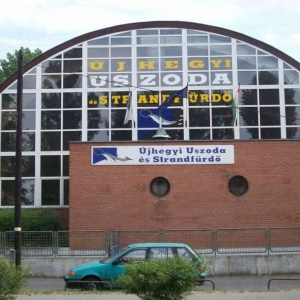
újhegyi uszoda

Újhegy - swimming pool engineering

The basic task was to control the backwash heat recovery system. Filtration and backwash take place at night and are managed using an interactive interface, during which the thermal energy of the drained pool water is recycled.
zánka

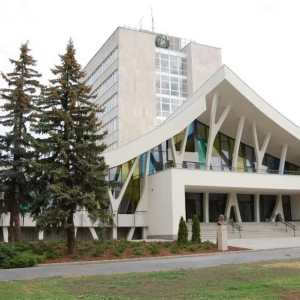
Zánka heating modernization

We replaced the outdated control and regulation system with modern, intelligent and energy-efficient devices. During a renovation, we established a communication (BacNet) connection between the boiler houses and their associated heating centers, so that the boiler control algorithms can take into account the needs of individual consumers based on the time program. Such time-based heating control allows for very affordable, yet economical heating.

budai vár

Buda Castle building automation

We have designed and implemented the heating system with nearly 50 heating centers and of course the associated heating circuits. The heating technology includes the production of hot water and the control of the ventilation system. In addition to the building engineering works that have been completed, we are currently also carrying out monthly maintenance works.

eurodemic

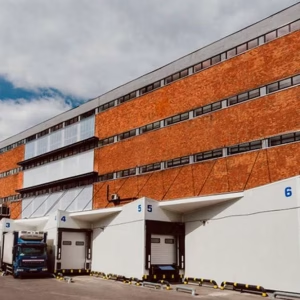
Euromedic warehouse industrial automation

We created a monitoring system for the Daikin heat pump system installed at the XI. district site. We solved the full automation of 120 indoor units at the site via LON gateways so that the indoor wall modules can be flexibly configured through the monitoring according to the nature of the rooms. Furthermore, the control of the cold storage rooms was monitored (Mod-bus).

kuka

Kuka Robotics building automation

Extensive system integration at KUKA Robotics sites. In addition to controlling traditional boiler houses, we created a complete zone control system with fan coils. Use of traditional and custom-made FCU controllers according to local needs. Coordination of SystemAir air handlers (Modbus) with zone controllers. Management of a highly complex solar collector system. Zone control with thermofans in an industrial area. According to the operator, by implementing the integration and automation, a nearly 30% reduction in gas consumption was achieved compared to the previous island-like automation. We are currently also performing monthly maintenance work.

borsodchem

Borsodchem industrial automation

Control of variable air volume (VAV) control of chemical cabinets. Control of the ventilation system of laboratories per room, taking into account the operation of the chemical cabinets in the rooms.

xenter13

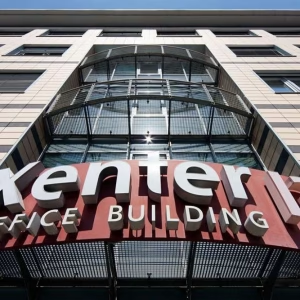
Xenter 13 Office building gas restriction

Gas limitation and electricity consumption measurement. Gas consumption measurement is implemented on a pulse principle, the controller calculates the consumption value (m3/h) from the speed of the pulses. The limitation is implemented in several stages. Electricity consumption measurement is performed via communication (Mod-bus) meters. Detailed trends are created from the measurements with different timing. Operators are informed about the clock settings and interventions by e-mail.
dunatower

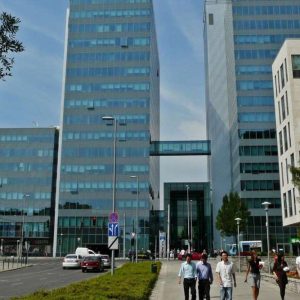
Duna Tower Honeywell automation

As a subcontractor of Honeywell Ltd., we are responsible for connecting and commissioning Honeywell automation controls during the design of office spaces.
alkotáspoint

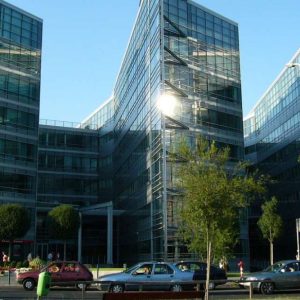
Alkotás Point Office Building Building Automation

We took over the automation system of the Alkotás Point office building as part of the renovation. We took over the operation of the heating and cooling circuits, air handlers, and automatic ventilation during the heating season within a week without any downtime. During the reprogramming, we implemented the communication between the individual subsystems in order to minimize gas consumption. We are currently also performing monthly maintenance work.

honvéd

Honvéd Hospital building automation

The VI building automation system is a complete implementation from design to commissioning. We are currently also performing monthly maintenance work.
szentistván

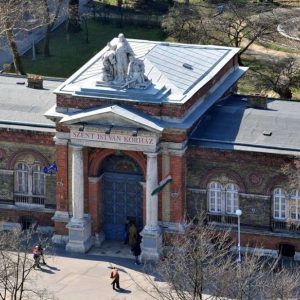
St. Stephen and St. Ladislaus Hospital

We operate heating and air handling units on the hospital premises. Most of them were designed and built by our company, but there are some units that we have taken over for operation. We are currently also carrying out monthly maintenance work.

magyarkir

Magyar Király Hotel building automation

The heating and cooling needs of the hotel are basically provided by a heat pump system. During the heating season, as the outside temperature decreases, the efficiency of the heat pumps decreases. The task of the automation is to minimize costs by selecting the appropriate heat source. All electricity and gas consumption meters of the building are integrated into the monitoring system. The fan-coil controllers of the rooms to be rented (120 pcs) monitor the occupancy to select their operating mode. The 9 VTS air handlers are part of the control via the LON communication system, the heat pump heating system is also connected to the monitoring system via a communication channel (Mod-bus). We are currently also carrying out monthly maintenance work.

főtáv

Főtáv Zrt. remote monitoring

In the reconstruction works of the heating plant of FŐTÁV Zrt, Honeywell Kft. as a subcontractor, commissioned 350 heating plant automation systems. Design survey of another 1800 heating plants. We are currently also performing monthly maintenance works.
tiszaújváros

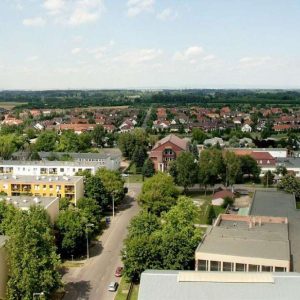
Tiszaújváros district heating modernization

Here we operate the country's most modern district heating service center. Nearly 180 heating centers have been integrated. Heat quantity measurement and electricity consumption measurement are performed at each substation (M-bus). The heating center pumps are connected to the heating controller with a LON communication module, so it can be dynamically configured (pressure control, constant speed operation, etc.). Consumption billing to residents is done according to these measurements. Temperature trends are recorded in the heating center controllers for a month, and this data is stored in the monitoring system for 5 years. We are currently also performing monthly maintenance work.

siófok

Siófok district heating service automation

The boiler system responsible for the district heating service and the operation of the city's heating centers. In the central boiler house, in addition to the automatic control of the boilers, the control strategy is optimized by collecting and evaluating detailed consumption data (M-bus).

siópláza

Sió Plaza building automation

The automation system of the mall, in addition to controlling the standard elements (heating, cooling circuits, air handling units, ventilation systems, VAV systems, fan-coli units), collects data via communication channels from essentially all mechanical systems (Jet fans, window controls, etc.). All electricity consumption meters and heat meters are integrated into the monitoring system. We are currently also performing monthly maintenance work.

penny

Penny building automation

Construction, installation, commissioning and programming of building engineering power and automation control cabinets in more than 70 stores.

budapestbank

Budapest Bank ventilation system

Control of the ventilation system of more than 60 bank branches. Design and construction of automation cabinets, programming of controllers. A remote access system was implemented at the premises of the maintenance company.

csház

Budapest XVIII heating automation

The uniqueness of the heating automation of the Erdősáv utca family house lies in the fact that we have created a unique zone controller for each room that reflects the customer's needs. Each zone has its own wall module with an LCD display. There are rooms where there is only underfloor heating, there are also ceiling cooling, and there are some where fan coils are also operating in addition to these. In the latter case, a zone controller is capable of controlling the underfloor heating and ceiling control as well as 3-stage fan coils, taking into account their specificities. One of the features of fan coil control is that the owner can edit the maximum permitted level in a time program, taking into account sound effects. For example, it can be solved so that only the surface circuits operate at night.

csház

Miskolc home automation

Nowadays, when automating a family house (building a smart home), the appearance and design of the built-in elements are of great importance. With this in mind, in accordance with the interior design plans, in some rooms we can find special-looking (KNX) communication wall modules, while in other rooms we can find temperature sensors that fit the design of the light switches. Due to the simple handling, we created our own zone control system for the non-KNX rooms, the logic and handling of which are the same or very similar to those of the KNX rooms. We implemented further cooperation with the integration of the Helios (LON) air handlers and the Dantherm pool dehumidifier (Mod-bus). This is because we could only properly and optimally manage the heating and cooling circuits with the operating status of these “external” devices. A particularly important and major task was the integration of the Dantherm dehumidifier and the coordination of its operation with the infrared heater, underfloor heating, fan-coil cooling and pool water temperature control in the pool area. Of course, remote control via mobile phone is also available here.

csház

Budapest XVI building automation

We solved the building automation of a 7-zone family house in Ránki Street in a fairly cost-effective way. The zones are managed by a module capable of independent operation, which can also operate without a controller. In the absence of a network connection, it switches to backup operation and operates based on its internal parameters, and when connected to a communication network, it implements control according to the time program of the central controller. The advantage of this is that in the event of a possible DDC failure, the temperature control of the rooms operates. The LCD wall module installed in the living room allows you to find out about the status of each room (measured value, desired value, valve position, etc.). The other 6 rooms have an inexpensive but highly accurate thermometer mounted in the same frame as the light switch. The display placed in the living room can also be used to issue the heating and cooling switching command and to indicate departure. The owner makes all settings on the web monitoring, in accordance with the expectations of the modern smart home. The display in the living room is essentially just a backup in case of a possible network failure. The building automation system controls a heat pump suitable for heating and cooling, the operation of which is coordinated with the boiler, solar heating with solar collectors and pool control. During the implementation and design, we placed particular emphasis on coordinating the operation of the boiler and heat pump, error management and minimizing costs, taking into account that the heating efficiency of the heat pump decreases as the outside temperature decreases. The system also includes an independent intelligently controlled air handler, which has a different time program for each season (winter, transition, summer). This is because better efficiency can be achieved if the daily required operating hours are carried out in the midday and early afternoon hours in winter, and in the early morning hours in summer. The central controller also controls an irrigation system with a well and the entire pool. The temperature of the rooms can also be controlled remotely from a mobile phone.

Why Request a Quote from Us?

Automation has been our core expertise since 1998. Over the years, we have built extensive experience in both industrial process automation and building automation projects.

Over the past decades, we have:

  • Delivered numerous industrial and building automation systems.  
  • Developed integrated solutions that allow heating, shading, air conditioning, ventilation, solar thermal systems, photovoltaic systems, and heat pumps to operate together as one efficient and intelligent system.

In addition to automating the heating system, we can also ensure that shading, air conditioners, ventilation, solar collectors, solar panels or a heat pump operate from one system, so that they can operate as a unified and efficient system.

We can work with architectural designers and contractors. Our activities do not replace, but complement the work of heating engineers, security specialists, and companies that distribute shading technology.

We purchase the sensors and central units we use from renowned, market-leading specialists (Siemens, Honeywell) who have proven their expertise in this field for decades.

We guarantee the work we do.

In addition to all this, we also provide long-term service.

Precise Technical Solutions – From Surveying to Automation

3D laser scanning, digitalization and building automation solutions from a single source.

Scroll to Top