
Use Cases and Gallery
How do most companies work today?
In most survey, documentation or inspection tasks, professionals still use the following methods:
📏 Manual measurements – tape measure, laser rangefinder, leveling tools.
📸 Photo documentation – mobile phone pictures, camera documentation.
📝 Notes and field sketches – hand-drawn sketches, field notes, size charts.
📄 Using old design documentation – paper-based plans, PDF drawings, CAD files.
Problem: the real state often differs from the documentation.
👷 On-site presence of specialists – designers, contractors, auditors, operators.
Problem: It is often necessary to be present in person to obtain the necessary information.
🔄 Repeated checks and re-measurements – design control, construction inspection, audits.
Problem: every new question may mean another site visit.
🏢 Physical site visits – real estate presentation, viewing the event venue, technical inspection.
Problem: significant time investment on the part of both interested parties and service providers.
📂 Scattered sources of information – photos in separate folders, blueprints in separate systems, Excel files, PDF documents, etc.
Problem: It is difficult to get a unified picture of the given location.
If we look at this list, the same three main problems appear in almost every case study:
1. Too much time takes to do on-site work, to travel, to do re-measurements, to create documentations.
2. Things cost too much:
working hours
disembarkation
error correction
subsequent modifications
3. Errors/misunderstandings due to incomplete information:
not enough accurate data
missing dimensions
lost informations
outdated documentation
A 3D szkennelés valójában nem „szkennelést” ad el, hanem reduced time, cost and uncertainty. This is the common denominator in almost all areas of use.
Traditional Methods vs. Handheld Scanners
3D laser scanning itself is already a significant advantage compared to traditional survey methods.
However, the real value lies not only in the survey, but in the resulting digital model:
3D environment resulting from scanning isnot only freely accessible, but accurate measurements can also be made, even months or years after the survey. This can significantly reduce the number of re-measurements, return visits, and errors due to incomplete data.
Furthermore, thanks to our partnership, we have we can also provide a professional software environment, in which project participants can place objects, notes, tasks, and other information directly within the digital model. Projects can be shared via a web interface with team members, such as designers, contractors or customers they can see the same current data and work in the same digital environment, regardless of where in the world they are located.
Thanks to this communication can become faster, decision-making can be simplified, the number of misunderstandings can be reduced, and a single, up-to-date source of information can be available to all stakeholders throughout the entire project lifecycle.
Selling or renting a property
The challenge
When selling or renting a property, most interested parties try to make decisions based on available photos, videos, and floor plans. However, these often do not provide a true picture of the location, the relationship of spaces, or the actual dimensions.
As a result, real estate agents often arrange in-person viewings that ultimately do not lead to a deal.
The process requires a significant investment of time from salespeople, while potential clients often only discover on site that the property does not meet their expectations.
How does our digitalization solution change this?
A complete digital copy of the location can be created, which can be viewed online, through a browser, and shared with interested parties, giving them a real-world experience, allowing them to freely explore the property, and gain a more accurate picture of its size, layout, and condition.
Measurements can also be taken in the digital model, which can be especially useful for commercial properties, offices or retail spaces, where tenants often want to check certain dimensions or placement options during the first consultation.
Thanks to the collaboration platform, salespeople, owners, tenants, investors or even interior designers can work in the same digital environment. They can place comments on the model, mark questions and manage all communication on a single, common interface.
This can be particularly beneficial for foreign investors, multinational companies, or rental processes involving multiple decision-makers.
Top 3 business benefits
1. Fewer unnecessary on-site visits
– less wasted work time and a more efficient sales process.
2. Faster decision making
– shorter sales and rental cycle.
3. Higher quality customer experience and competitive advantage
– a more professional appearance, greater confidence and standing out from the competition.
Event venue sales and event planning
The challenge
The biggest problem when selling and filling an event venue (hotel, conference center, industrial hall, outdoor location, wedding venue) is not a lack of interest, but the difficulty for organizers and clients to accurately understand the characteristics of the space in advance.
Decisions are often made based on photos, floor plans, and site visits, which do not reflect:
- the true proportions and relationships of spaces
- possible configurations of the equipment (seating, stage, catering zones)
- the limitations of the technical infrastructure (sound, light, entrances, logistics)
- the operation of guest flow and logistics routes
The consequence of this is that:
- many site visits are made to irrelevant customers
- it becomes clear at a late stage of event planning that it "does not fit" or "is not optimal"
- a lot of coordination and re-planning is required
- the sale of the venue is slower and more uncertain
How does our digitalization solution change this?
The location can be transformed into a complete, millimeter-accurate digital twin that can be navigated, measured, and interactively designed from a browser.
Walkable digital location
Event organizers and clients can virtually tour the entire venue before physically visiting, allowing them to develop a sense of space and decision-making confidence much more quickly.
Measurable and plannable environment
The digital model allows for precise measurements, such as:
- placement of tables, stage, stands can be planned in advance
- accurate capacity can be quickly checked in different setups
- The placement of technical equipment (e.g. LED wall, loudspeakers, backstage areas) can be validated
Collaborative design interface
On the platform, the event organizer, the venue operator, the technical crew and the client can work in the same digital space.
- placing notes at specific points in space
- visual discussion of setup variations
- approvals and modifications managed in one place
- engaging remote customers without physical presence
This is especially important for international events, large corporate events, or productions involving multiple subcontractors.
Top 3 business benefits
1. More closed event sales
– Potential customers understand the location and its potential much more quickly, making it easier for them to make a decision.
2. Fewer faulty or inadequate event plans
– less last-minute re-planning, fewer costly modifications on site.
3. Faster and more efficient organizational process
In the collaborative digital space, all actors work on the same model, so:
- fewer rounds of negotiations are needed
- fewer rounds of negotiations are needed
- a faster approval process is developed
Result: shorter sales + preparation cycle, higher venue utilization.
Preparing film locations
The challenge
In the film industry, selecting and preparing a filming location is an extremely complex process, because creative ideas and physical reality must meet with millimetre precision.
Problems typically appear in the preparation phase:
- the director's and cameraman's ideas do not match the real space
- the exact placement of the set, camera angles and lighting equipment can only be determined during a site visit.
- logistics (cabling, equipment movement, crew movement) are difficult to plan in advance
- deciding between multiple locations is slow because everything requires a physical visit
This is particularly problematic:
- for international productions
- for multi-location filming
- in high-budget productions where every day of filming is extremely expensive
How does our digitalization solution change this?
The venue will be transformed into a fully digital production space that will be the center of creative and technical decision-making.
Walkable, realistic digital set preparation
The 3D model created from the scan allows you to:
- the director and cinematographer should be able to “walk into” the space before arriving at the location
- camera positions, angles and blocking can be tested in advance
- the clashes between the set and the real space should be revealed early on
This is practically a "previs location selection layer" over real space.
Production planning and technical setup validation
In the digital model:
- lighting setups can be placed virtually
- the movement of crane, dolly, rig and other camera equipment can be simulated in advance
- crew movement routes and logistics zones can be optimized
- narrow corridors, ceiling height, load capacity problems can be identified in advance
Collaborative production space
The platform allows you to work in the same digital environment with the director, the cameraman, the production designer, the location manager, the VFX/CGI team and the producer too.
This allows them to:
- placing notes at specific points in space (e.g. “camera position A will be here”)
- comparison of different versions
- rapid decision-making involving remote actors
This is especially important for international productions, for example when a crew works in several countries at the same time (e.g. global projects for streaming services like Netflix productions).
Top 3 business benefits
1. Less expensive site scouting and re-inspection
– lower preparation costs and faster location selection.
2. Fewer shooting days lost and logistical errors
– less downtime, less re-planning on the day of shooting (which is the most expensive period).
3. Faster pre-production and better creative decisions
– shorter pre-production cycle and more confident creative decisions.
Introducing a hotel to international clients
The challenge
In the hotel industry, acquiring international guests and business partners depends heavily on how accurately they can understand the location in advance.
The problem is not the lack of information, but that classic presentation tools (photos, videos, descriptions) do not reflect the real spatial experience.
This is especially critical:
- at premium and luxury hotels
- at conference and business hotels
- for central sales of chains (corporate booking)
- in the MICE (Meetings, Incentives, Conferences, Exhibitions) segment
How does our digitalization solution change this?
The entire hotel building and service space is transformed into a walkable, measurable and collaborative digital twin that can be accessed by customers from anywhere in the world.
Precise planning of event and conference spaces
In the digital model, MICE clients and event organizers:
- In the digital model, MICE clients and event organizers can: plan seating, stage, catering zones in advance
- can check the capacity in different setups
- they can validate technical needs (sound, lighting, backstage)
- optimize guest flow
This reduces misunderstandings and last-minute changes.
Collaborative sales platform
The hotel, sales partners and international customers can work in the same digital space.
- placing notes for specific rooms or spaces
- Visual reconciliation of offers and configurations
- Involve decision-makers without traveling
- joint work of several stakeholders (e.g. company + event agency)
This is especially useful for international corporate clients and travel agencies.
Top 3 business benefits
1. Higher international booking rate
– more direct bookings and fewer “cancelled interest” in the decision phase.
2. Shorter sales cycle for B2B and MICE clients
– faster contract conclusion and higher utilization.
3. Stronger premium positioning and competitive advantage
– higher perceived value, stronger brand, better price enforcement ability
Interior design in an existing building
The challenge
Interior design in existing buildings is one of the most difficult design situations because it does not start from a “blank canvas” but from a given, often inaccurately documented, real-world space.
The main problems:
- existing floor plans are often outdated or inaccurate
- the actual space proportions (interior height, wall thicknesses, openings) may differ from the documentation
- On-site survey is time-consuming and each iteration may require re-walking
- designers, contractors and clients often do not see the same “space” in their minds
- discrepancies between concept and feasibility are revealed late
How does our digitalization solution change this?
The existing building is transformed into a highly accurate, walkable and measurable digital foundation on which the entire design process is built.
Accurate, real-world based design space
The 3D model created from the scan:
- reflects a real geometric state (not an assumed floor plan)
- every wall, opening, column and structural element is exactly in place
- the interior designer does not design from a "drawing", but from a real space
This drastically reduces the “plan vs. reality” discrepancy.
Walkable design environment
The designer and the client:
- they can tour the digital building together
- they can interpret the concept in space (not just on a 2D floor plan)
- spatial relationships and proportions are easier to understand
- alternative layouts can be compared in the same environment
This is a particularly powerful tool for clients who make decisions not on a professional basis, but based on experience and visuals.
Collaborative design and approval platform
The design process takes place in a shared digital space:
- Interior designer places concept elements in the model
- customer can provide feedback on specific points
- the contractor can validate feasibility during the design phase
- each iteration is done in a versioned spatial model
This reduces misunderstandings between a “nice plan” and a “workable plan.”
Top 3 business benefits
1. Fewer design errors and construction rejections
-: fewer modifications, fewer construction corrections, lower project risk.
2. Faster design and approval cycle
– shorter project time and more efficient iteration.
3. Stronger customer understanding and better decision quality
– more confident decisions, fewer “I changed my mind later” situations, higher satisfaction.
Support for technical audits and regulatory inspections
The challenge
Technical audits and regulatory inspections (e.g. building safety, occupational health and safety, fire protection, energy, industrial compliance) are fundamentally high-responsibility but often time-sensitive processes.
The biggest problems:
- On-site visits are always time- and resource-intensive
- documentation (drawings, previous reports) is often incomplete or outdated
- the audit provides a snapshot, but it is difficult to recall the exact context later
- different disciplines (e.g. fire protection, mechanical engineering, statics) do not always interpret the same real state
- There is often uncertainty between the auditor and the operator about “what exactly did we see?”
This is especially critical:
- at industrial facilities
- in large public buildings (hospital, school, stadium)
- at logistics halls
- for complex systems involving multiple subcontractors
How does our digitalization solution change this?
The site becomes an accurate, traceable, measurable digital audit environment where the audit not only “happens”, but can also be reconstructed later with complete accuracy.
Auditable, measurable environment
In the digital model, the auditor:
- you can also make accurate measurements afterwards (e.g. escape route width, interior height, mechanical distances)
- compare real geometry with standards
- document non-conformity points linked to a specific spatial position
This is especially useful for multi-discipline audits where accuracy is critical.
Note-taking and evidence management in space
The collaboration platform allows you to:
- the auditor should comment on specific 3D points
- photos, documents and findings should be recorded in space
- all stakeholders (operators, planners, authorities) see the same context
- the previous state can be retrieved during subsequent audits
This significantly reduces disputes and misunderstandings.
Top 3 business benefits
1. Post-audit provability and dispute reduction
– fewer legal and professional disputes, stronger audit results.
2. Faster and more efficient verification process
– lower audit costs and more audits can be performed in the same amount of time.
3. Better cooperation between auditors and operators
– more efficient compliance process and faster problem resolution.
Survey of an existing building before renovation or conversion
The challenge
The most critical step before renovating or converting an existing building is to accurately understand the actual condition. This is the point where most project risks are already “built into” the subsequent costs.
The main problems:
- the available blueprints often do not match the real situation
- previous modifications are not documented
- Hidden structural elements, mechanical wiring, and false ceilings are difficult to map
- the survey requires separate visits from several disciplines (architect, mechanical engineer, electrician)
- every new information triggers re-planning and re-coordination
This is particularly problematic:
- in the renovation of old buildings
- in the renovation of office buildings
- in the recycling of industrial halls (brownfield projects)
- hotel / retail / public building modernizations
How does our digitalization solution change this?
The entire real-world condition of the building is transformed into a highly accurate, walkable and measurable digital foundation on which the entire renovation or conversion planning is based.
Crawlable and measurable survey environment
The designers and engineers:
- they can virtually tour the entire building
- can make accurate measurements in the model
- can also interpret hidden or hard-to-reach areas
- quickly check spatial relationships and structural conditions
This significantly reduces the need for multiple site visits.
Collaborative Survey and Design Foundation
The platform allows you to:
- architect, mechanical engineer and electrical designer work in the same model
- every observation should be tied to a specific point in space
- conflicts and problems can be identified before design
- the customer can also visually understand the existing status
This makes the survey not a separate phase, but the common basis of the entire planning process.
The role of TLS and the advantage of manual scanning
TLS still provides a strong foundation for larger projects, but manual scanning is particularly valuable:
- quick "gap fill" in missing areas
- update post-demolition statuses
- targeted re-measurement of problem zones
- adapting design iterations to the real state
Top 3 business benefits
1. Fewer design errors and construction surprises
– fewer on-site conflicts, fewer modifications during construction, lower project risk.
2. Faster survey and design process
– shorter project launch time and faster decision-making.
3. Better sectoral coordination and transparency
– more effective cooperation and lower coordination costs.
Expansion of an industrial facility or installation of machinery
The challenge
In an industrial environment, installing a new machine or expanding a plant is not just a design task, but also a serious physical and operational risk.
The main difficulties:
- accurate, up-to-date digital documentation of the existing plant is often incomplete
- It is difficult to find “free space” due to the density of machines, pipelines, cabling and structures
- installation routes (lifting, transportation, crane operation) are often only revealed during an on-site inspection
- there are often conflicts between design and actual implementation (space clash, accessibility, safety zones)
- Minimizing downtime means there is little opportunity for error or redesign
How does our digitalization solution change this?
The plant becomes a high-precision, traversable and measurable digital twin in which expansion and machine installation can be simulated and validated in advance.
Pre-validation of machine installation and logistics routes
In the digital space, engineers:
- can simulate the lifting of machines (craning, loading, moving)
- can check the minimum free cross-sections
- can test maintenance access
- they can conduct collision tests with existing infrastructure
This is especially important for large, difficult-to-move machines.
Collaborative engineering design space
Actors participating in the project they work in the same digital model:
- precise designation of machine locations in space
- entries for specific collision points
- comparing alternative layouts
- rapid iteration along feasibility
This significantly reduces late-stage conflicts.
The role of TLS and the advantage of manual scanning
TLS provides a strong foundation for large industrial plants, but plants are constantly changing (new machines, rearrangements) and Rescanning the entire plant for every expansion is not realistic.
This is why manual scanning is particularly valuable:
- quick update of targeted areas
- recording the current status before new machine locations
- Rapid validation of “as-built vs. planned” discrepancies
- status tracking during maintenance and expansion
Top 3 business benefits
1. Fewer collisions and construction errors
– fewer on-site modifications, less downtime and lower construction risk.
2. Shorter downtime and faster installation
– minimized production loss.
3. More effective multi-sectoral coordination
– lower engineering coordination costs and faster project execution.
Construction documentation and status tracking
The challenge
One of the biggest risks in construction projects is not the construction itself, but the fact that the actual state constantly deviates from the plans, while this deviation is not always visible in time.
The main problems:
- the state of construction is often documented only with photos and notes
- it is difficult to trace back what the actual readiness was at a given time
- the disciplines (structure, mechanical engineering, electrical engineering) work in parallel, but do not always refer to the same real state
- subcontractors document in varying quality and detail
- in later disputed situations, there is a lack of a “reliable spatial source of truth”
How does our digitalization solution change this?
The construction site becomes a continuously updated, traversable and measurable digital twin that tracks the real construction status over time.
Walkable construction status tracking
Project participants:
- they can virtually tour the recent construction status
- they can compare the planned and realized state
- can quickly identify discrepancies
- they see the project not only from 2D reports, but also in a spatial interpretation
This is a particularly powerful tool for project management and technical control.
Collaborative construction coordination
The platform allows you to:
- main contractor, subcontractors and technical inspector work in the same space
- problems should be recorded in a specific place (not just in a report)
- to be able to react quickly to differences
- everyone sees the same reality
This significantly reduces communication noise during construction.
The role of TLS and the advantage of manual scanning
TLS remains a useful reference for large projects, but the construction status is constantly changing and in many cases only critical zones need to be updated
This is why manual scanning is particularly valuable:
- quick progress update (weekly/daily status tracking)
- targeted documentation of problem areas
- immediate recording of changes
- Rapid detection of “as-built vs. as-planned” discrepancies
Top 3 business benefits
1. Real-time, spatial project transparency
– fewer misunderstandings, faster problem handling, better control over implementation.
2. Fewer construction errors and rework
– less demolition, less remanufacturing, lower cost.
3. Stronger documentation and dispute management foundation
Every state is traceable and provable in space and time.
– better accountability, fewer disputes with subcontractors and customers.
Facility management / operation
The challenge
Whether it is a site consisting of one or even several buildings, serious information and coordination problems may arise during operation.
The main problems:
- technical systems (HVAC, electrical, mechanical) are often managed based on outdated, inaccurate documentation
- the location of the defects is often not defined precisely enough (e.g. “second floor mechanical shaft” vs. specific point)
- maintenance history is in fragmented systems (Excel, CAFM, notes, emails)
- different service providers do not always see the same real state
- modifications (renovation, conversion, repair) are not always reflected in the "as-built" documentation
How does our digitalization solution change this?
The building becomes a unified, accessible and measurable digital operating model, which is not just documentation, but an active operating interface.
Error handling in space, not in list
The maintenance process is transformed:
- errors are not only displayed as text tickets, but are linked to a specific 3D location
- the technician sees exactly where the problem is and how to access it
- previous repairs and interventions can be viewed in the same place
- misunderstandings between the applicant and the contractor are reduced
This is especially important for “hidden” systems (false ceilings, mechanical shafts, pipes behind wall structures).
Collaborative FM platform
Thanks to the system, everyone works in the same digital space:
- tasks appear in a spatial context
- photos and records are linked to the exact location
- changes are immediately reflected back into the model
- everyone sees the same real building
Top 3 business benefits
1. A unified and always up-to-date building model
– fewer information errors, better decision-making, greater control.
2. Faster and more accurate error handling
– shorter reaction time, fewer misunderstandings, more efficient maintenance.
3. Lower operating costs and fewer re-trips
– lower FM costs and more efficient resource use.
Retrofitting a building automation system
The challenge
Retrofitting a building automation system (BMS/BAS) into an existing building is one of the most complex FM and electrical/mechanical integration tasks.
The main problems:
- the exact route of existing mechanical and electrical systems is often unknown
- lack of reliable, up-to-date “as-built” documentation
- the placement of sensors, controls and cabling may conflict with existing infrastructure
- it is difficult to foresee access points (ceilings, shafts, machine rooms)
- limited intervention options due to installation during operation
- the integration of different subsystems (HVAC, lighting, fire protection) is often only revealed on site
How does our digitalization solution change this?
The building becomes an accurate, walkable and measurable digital base model on which the entire automation system can be designed and validated in advance.
System design in real space (not on a drawing)
BMS design is not done on abstract floor plans, but:
- sensors and controls are placed in precise 3D positions
- cable routes and distribution points can be validated in advance
- access to mechanical units can be controlled
- collisions (e.g. pipeline vs. cable route) can be detected early
This significantly reduces construction surprises.
Collaborative integration design
All project participants work together in the digital space, making it possible to:
- for design notes placed at specific points
- for visual comparison of alternative sensor and cable designs
- for early inclusion of operational aspects (maintenance, access)
This is especially important in retrofit projects where “plannability” is severely limited.
Top 3 business benefits
1. Fewer construction conflicts and redesigns
– less demolition, fewer cable routing problems, lower construction risk.
2. Shorter and more predictable retrofit project time
– faster system implementation and lower project costs.
3. Better integration and long-term operability
– lower operating costs and a more stable system life cycle.
Energy efficiency modernization preparation
The challenge
The energy efficiency modernization of a building (e.g. insulation, replacement of windows and doors, HVAC modernization, lighting replacement, BMS implementation) always fails or is accelerated by a preparation problem: the initial state is not known precisely enough.
The main difficulties:
- the actual geometric and technical condition of the building is often not documented up to date
- details of thermal, mechanical and electrical systems come from fragmented sources
- it is difficult to accurately assess thermal bridges, structural connections, and mechanical loss points
- design decisions (e.g. thermal insulation thickness, mechanical replacement vs. retrofit) are based on uncertainty
- ROI calculations are sensitive to the accuracy of the input data
This is especially critical:
- in old office buildings
- in panel and apartment buildings
- at public institutions (schools, hospitals, municipal buildings)
- in industrial and logistics halls
How does our digitalization solution change this?
The building becomes an accurate, walkable and measurable digital base model, on which energy planning based on real data is built.
The model created from the scan:
- accurately records the geometry of the building (walls, doors and windows, spatial connections)
- provides realistic interior space proportions for energy simulations
- reduces the errors of the “assumed model”
- provides a uniform basis for all disciplines
This is especially important in thermal engineering and energy calculations, where even small geometric deviations can have a significant impact.
Spatial identification of energy loss points
In the digital model:
- thermal bridges and critical structural nodes can be localized in space
- the exact location of mechanical systems (HVAC, piping) is visible
- windows and doors and covering surfaces can be analyzed in real proportions
- energy loss zones can be interpreted visually
This helps to target energy audits and retrofit planning.
Simulation of modernization options in real space
Designers and energy experts:
- they can visualize different renovation scenarios (e.g. insulation thickness, mechanical replacement)
- compare the impact of interventions on the same digital model
- can more accurately estimate the investment cost vs. savings ratio
- they can avoid over- or under-planning
This directly improves decision quality.
Collaborative planning and audit environment
In the digital space, everyone from the designer to the contractor works together:
- findings appear tied to a specific location
- proposed interventions can be interpreted spatially
- all actors see the same real-life building model
- faster coordination between the technical and financial sides
Top 3 business benefits
1. More accurate energy calculations and better investment decisions
– more reliable ROI calculations and fewer “over-optimized” or under-planned investments.
2. More effective modernization planning
– shorter preparation phase and fewer modifications.
3. Better sectoral and financial coordination
– fewer misunderstandings, faster approval, more stable project financing.
Handheld scanners are valuable additions to existing scanner fleets
Handheld 3D scanners are not necessarily intended to replace traditional TLS (terrestrial laser scanner) systems. In many cases, they can be used as an effective complement to them.
While static laser scanners remain an excellent choice for projects requiring the highest accuracy, handheld scanners can provide a significant advantage for tasks where speed of survey, mobility, or documenting hard-to-reach areas are key considerations.
In practice, many organizations use a combination of workflows: critical areas are surveyed using a TLS system, while larger, less sensitive or areas requiring quick documentation are captured using handheld scanners. This results in significantly reduced on-site time while still delivering the required accuracy.
This can be particularly useful for construction documentation, condition monitoring, operational surveys, Digital Twin projects or urgent on-site data collection, where rapid availability and speed of data collection are of paramount importance.
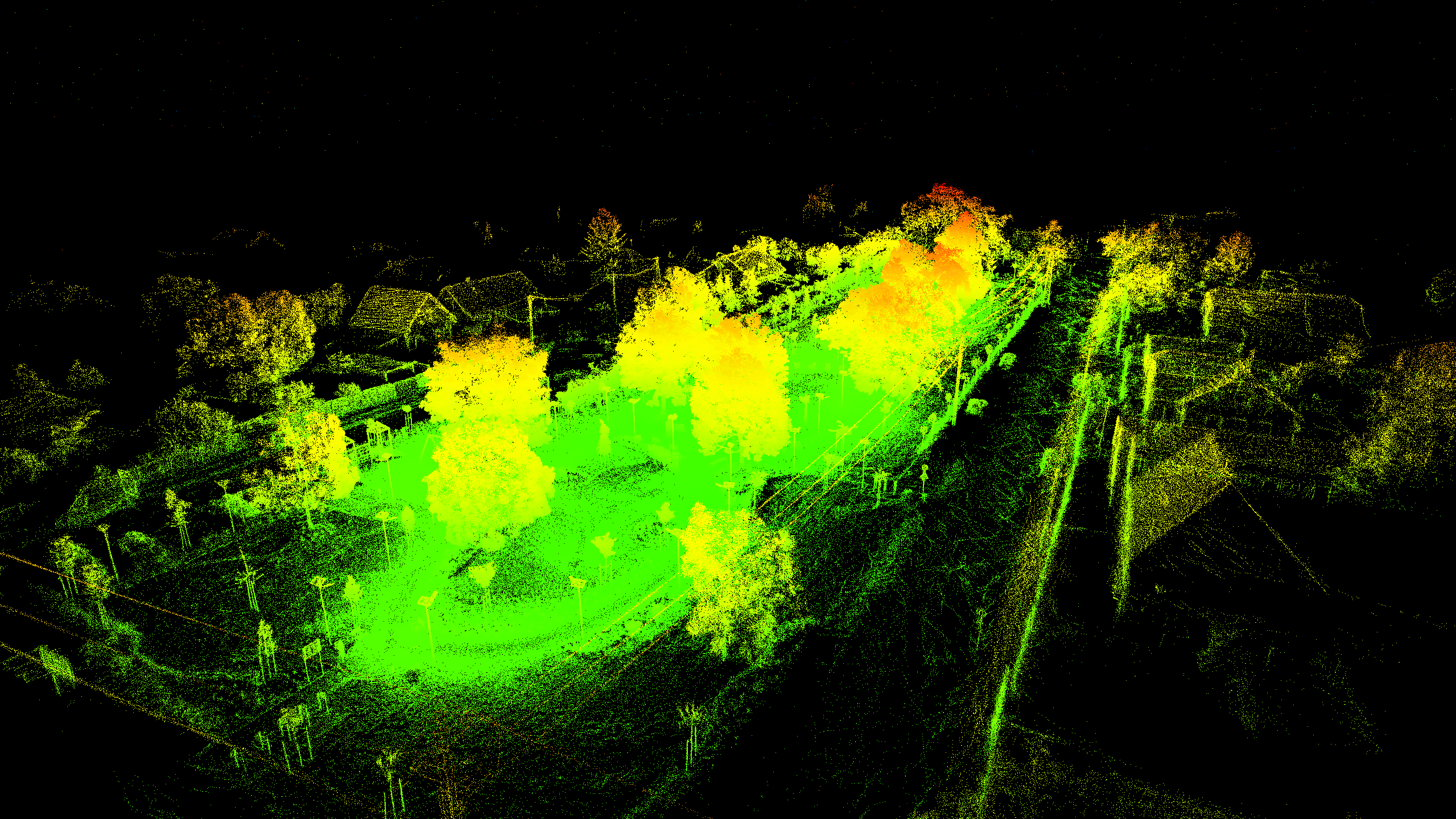
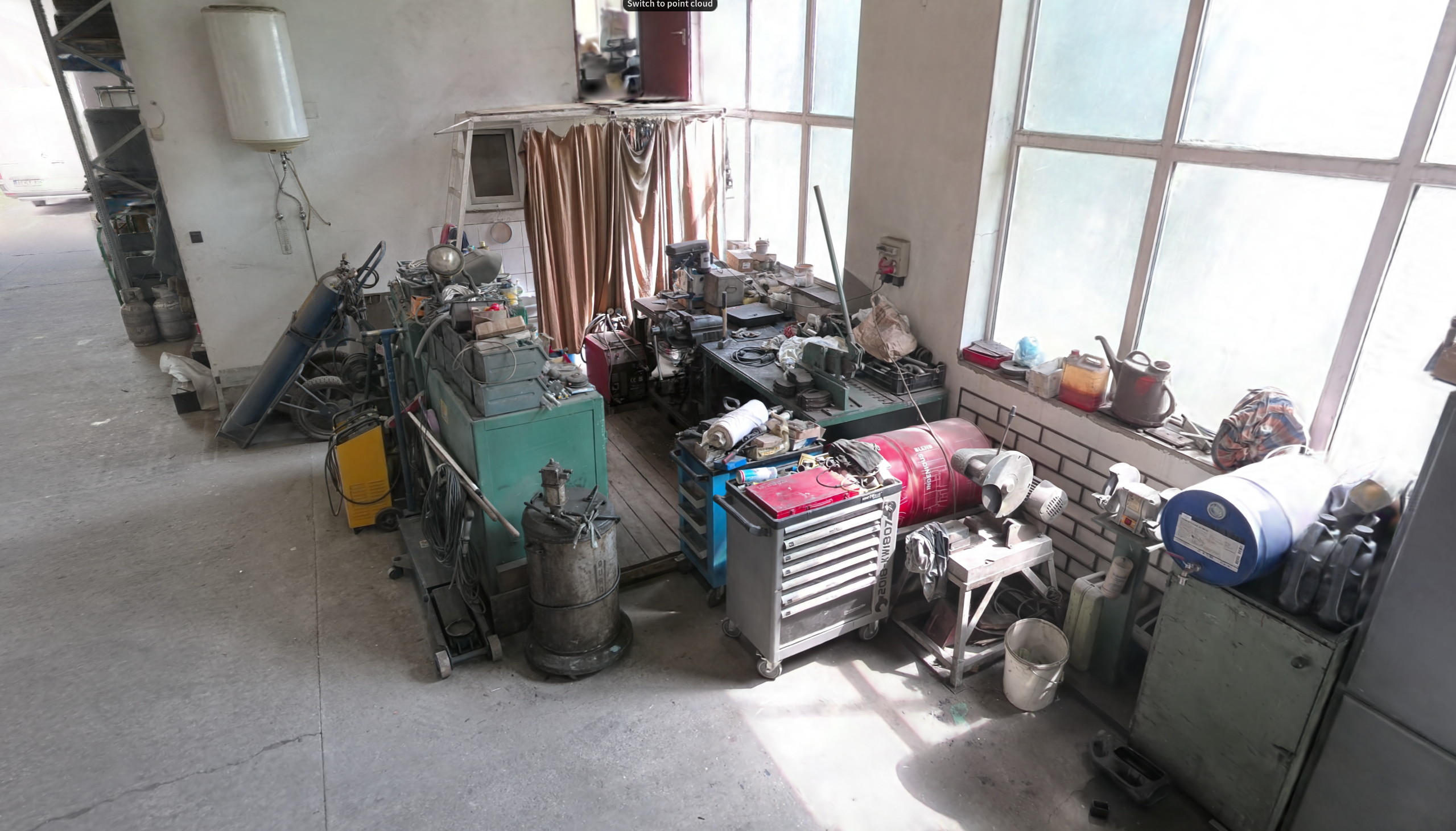
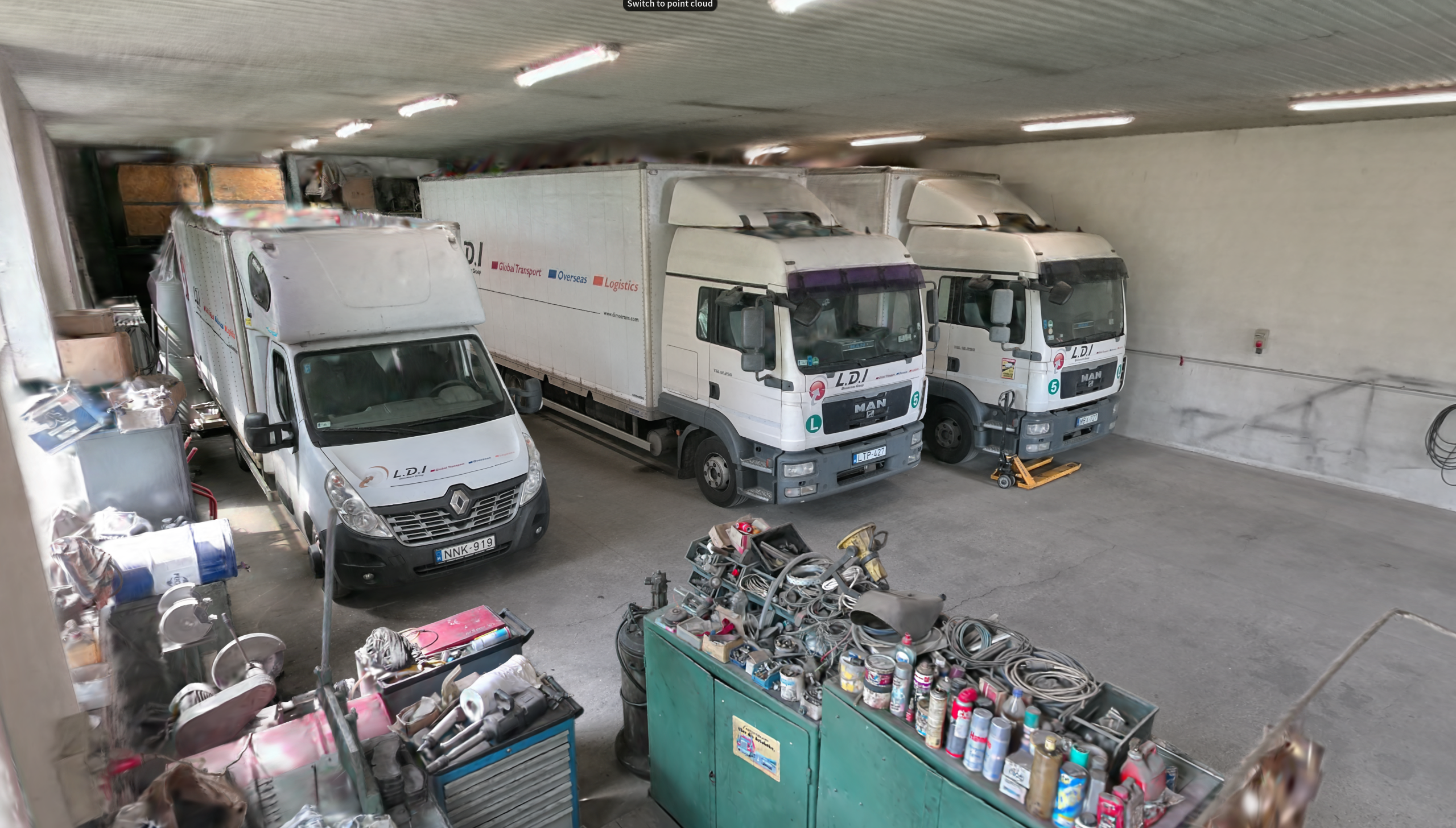
Mini Photo Gallery
Take a look at some images showing some of the locations we surveyed using 3D laser scanning technology.






Precise Technical Solutions – From Surveying to Automation
3D laser scanning, digitalization and building automation solutions from a single source.